
 New Horizons
 Project Management Academy
 Six Sigma Online
 TCM Security
 TRACOM
 Velopi
 Watermark Learning
 Login
Login


Our Blog
Resources and insights
The latest industry news, interviews, technologies, and resources.
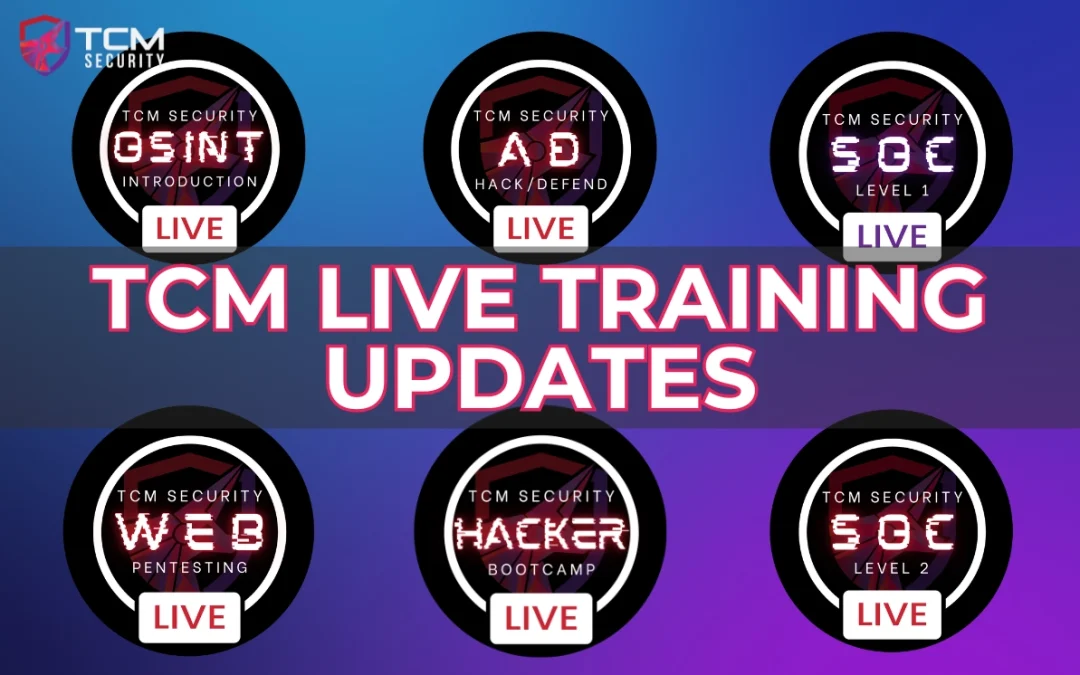
TCM Security Announces Updates to Live Training Offerings
In response to feedback from our community, the TCM Security team is pleased to announce some changes to our live training offerings to make certification prep more accessible and set every student up for success on their cybersecurity credentialing journeys! ...
How Often Should You Have A Pentest?
Most organizations will need at least one pentest annually, but some more frequent pentesting can be beneficial for finding vulnerabilities and reducing risk.
OWASP Top 10 Prediction | 2025
In this blog, we will make a prediction about the OWASP Top Ten for 2025 by taking a look at CVE data from 2021 through 2024.

How Often Should You Schedule a Penetration Test?
In today's world, massive data breaches and sophisticated malware litter news headlines. Unfortunately, it often feels as though it's more when your organization will fall victim, rather than if. Still, many organizations choose to only meet baseline compliance...
Security Teams Need to Think Like Pentesters
We conduct a wide variety of assessments for a wide range of clients. We provide assessment services for universities, health care companies, law firms, telecommunication providers, and many more. Some of our clients have mature infrastructures, while others are still...

So You Want to Be a Hacker: 2022 Edition
Video Version: https://youtu.be/lhz0-qAQlBM Introduction Last year, I posted a blog (https://tcm-sec.com/so-you-want-to-be-a-hacker-2021-edition/) and video (https://www.youtube.com/watch?v=mdsChhW056A) on how to become an ethical hacker in 2021. Given that it...
Bypassing Defender the Easy Way – Fodhelper
If you’ve ever tried to run a command prompt as administrator on your Windows OS before, you’ve seen a harmless popup appear. This is Windows User Account Control, or UAC. According to Microsoft, UAC “is a fundamental component of Microsoft’s overall security vision....
Pentest Tales #002: Digging Deep
Welcome to the second edition of Pentest Tales, a blog series that walks through real-world pentests we’ve performed in the past.
Kerberoasting Domain Accounts
The Gift That Keeps on Giving Few vulnerabilities in the Windows Active Directory environment have had the long-lasting impact that Service Principal Names (SPN) have. Domain-connected services, such as MSSQL servers, web servers, and more may be connected and issued...
Stay Ahead of Cyber Threats
Get expert insights on the latest penetration testing strategies, emerging vulnerabilities, and cybersecurity best practices—straight to your inbox.
Loading form...
We care about your data in our privacy policy.