
 New Horizons
 Project Management Academy
 Six Sigma Online
 TCM Security
 TRACOM
 Velopi
 Watermark Learning
 Login
Login


Strengthen Your Policies and Protect Your Business
Loading form...
Ready to ensure your security policies align with best practices and real-world risk? Fill out the form to connect with our experts. After a quick intro call, you will have a tailored quote within 48 hours.
More Security Auditing Services
- Security Policy Assessment
- Cloud Security Assessment
- Network Configuration Assessment
- Password Audit
- Security Risk Assessment
- Tailored Security Consulting
A security policy assessment evaluates an organization’s existing security policies, procedures, and governance frameworks to ensure they are comprehensive, effective, and aligned with industry best practices. It reviews policies covering areas such as access control, data protection, incident response, and acceptable use, identifying gaps, inconsistencies, or outdated practices. By providing actionable recommendations, a security policy assessment helps organizations strengthen compliance, improve security governance, and ensure that people, processes, and technology work together to support a strong overall cybersecurity posture.
Learn More
A cloud security assessment evaluates the configuration, architecture, and controls of cloud environments to identify risks unique to cloud platforms. It reviews areas such as identity and access management, network segmentation, data protection, logging, and compliance with cloud provider best practices. By identifying misconfigurations and security gaps across services like AWS, Azure, or Google Cloud, a cloud security assessment helps ensure cloud resources are securely deployed, properly monitored, and aligned with an organization’s overall cybersecurity strategy.
Learn More
A network configuration assessment reviews the design and settings of network devices and controls to identify weaknesses, misconfigurations, and unnecessary risk. It evaluates components such as firewalls, routers, switches, segmentation, access control rules, and network services against security best practices. By identifying overly permissive rules, legacy configurations, and design gaps, a network configuration assessment helps ensure the network is securely configured, well-segmented, and aligned with an organization’s overall cybersecurity strategy.
Learn More
A password audit evaluates the strength and management of an organization’s passwords and authentication practices. It identifies weak, reused, or compromised credentials, as well as gaps in password policies, multi-factor authentication, and account management procedures. By uncovering vulnerabilities in how passwords are created, stored, and enforced, a password audit helps organizations reduce the risk of unauthorized access, credential-based attacks, and account compromise, strengthening the foundation of overall cybersecurity.
Learn More
A security risk assessment is a comprehensive evaluation of an organization’s systems, processes, and assets to identify, analyze, and prioritize potential security threats. It examines vulnerabilities, potential attack vectors, and the likelihood and impact of security incidents, taking into account people, technology, and physical controls. By highlighting risks and providing actionable recommendations, a security risk assessment helps organizations make informed decisions, strengthen defenses, and align their security strategy with business objectives to reduce the likelihood and impact of breaches.
Learn More
We provide expert guidance and strategic support to help organizations assess, design, and strengthen their cybersecurity programs. Consultants analyze risks, review policies and controls, evaluate technical and physical defenses, and provide actionable recommendations tailored to an organization’s specific environment and industry. By leveraging their expertise, organizations can make informed decisions, improve security posture, ensure regulatory compliance, and implement effective strategies to prevent, detect, and respond to evolving cyber threats.
Learn More
Our Approach
With roots in education and hands-on training, our security policy assessments are designed to help your team craft comprehensive, effective policies to improve your security posture. From day one, you’ll have direct access to our auditors through a dedicated communication channel, where we provide ongoing updates and context around our findings.
Policies and plans we can assist with include, but are not limited to:
● Access Control Policy
● Disaster Recovery Plan
● Password Policy
● Remote Access Policy
● Acceptable Use Policy
● Incident Response Plan
● Bring Your Own Device Policy
● Other policies and plans depending on specific customer content
At the conclusion of the audit, you’ll receive a detailed report with our recommended policy improvements. We can also help craft new policies that comply with security best practices and are tailored to meet the unique needs of your organization.
Our Methodology
All testing performed is based on the NIST SP 800-115 Technical Guide to Information Security Testing and Assessment, OWASP Testing Guide (v4), and customized testing frameworks.
Our security policy assessment process includes the following steps:
Plan
Customer goals are gathered and clear rules of engagement are established to guide the engagement.
Discover
Perform scanning and enumeration to identify potential vulnerabilities, weak areas, and exploits within the environment.
Report
Document identified vulnerabilities, exploits, failed attempts, and key security strengths and weaknesses.
By the Numbers
Key Statistics
%
of all data breaches were caused by external actors
Verizon 2025 Data Breach Investigations Report
%
of breaches were motivated by financial gain
Verizon 2025 Data Breach Investigations Report
%
of all breaches involved a “human element”
Verizon 2025 Data Breach Investigations Report
%
of all data breaches were caused by abuse of valid credentials
Deloitte Annual Cyber Threat Trends 2024
Why Security Policy Matters
Effective security policies are a cornerstone of a strong cybersecurity strategy, providing clear guidance for employees, processes, and technology to follow in protecting an organization’s assets. A security policy assessment evaluates your existing policies and procedures to identify gaps, inconsistencies, or outdated practices that could leave your organization exposed. By aligning policies with industry best practices and regulatory requirements, this service helps ensure consistent enforcement, supports compliance, and strengthens the human and procedural layers of your cybersecurity defenses—turning policies into a proactive tool for reducing risk and maintaining a resilient security posture.

Frequently Asked Questions
Security Policy Assessment
How does a security policy assessment differ from a security risk assessment?
A policy assessment reviews the effectiveness and completeness of security policies, while a risk assessment evaluates actual threats and vulnerabilities.
How does reviewing policies improve our cybersecurity posture?
It ensures employees and processes follow consistent security practices, reducing gaps and human error.
How does it support compliance with regulations (HIPAA, PCI DSS, ISO 27001, SOC 2)?
Assessing policies helps demonstrate governance, control effectiveness, and adherence to regulatory requirements.
How is a security policy assessment conducted?
Existing policies are reviewed and key stakeholders are interviewed to identify gaps or inconsistencies.
Can you help us create new security policies?
Yes, we can provide guidance and templates to develop or improve security policies tailored to your organization.
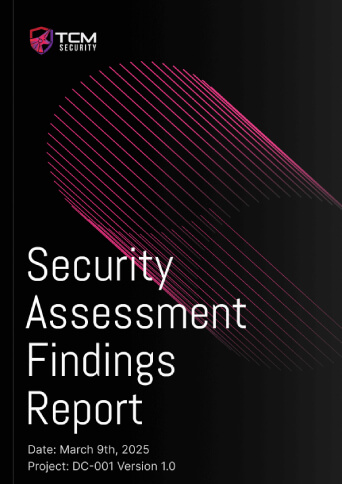
Inside a Real Pentest Report
A Report That Fortune 500 Companies Trust
Get a firsthand look at a real penetration testing report and understand how our expert team communicates risk, impact, and remediation steps.
Loading form...