
 New Horizons
 Project Management Academy
 Six Sigma Online
 TCM Security
 TRACOM
 Velopi
 Watermark Learning
 Login
Login


Secure Your Cloud and Protect Your Business
Loading form...
Ready to evaluate the security of your cloud environment? Fill out the form to share your needs and let our experts recommend the right assessment approach.
More Security Auditing Services
- Cloud Security Assessment
- Network Configuration Assessment
- Password Audit
- Security Policy Assessment
- Security Risk Assessment
- Tailored Security Consulting
A cloud security assessment evaluates the configuration, architecture, and controls of cloud environments to identify risks unique to cloud platforms. It reviews areas such as identity and access management, network segmentation, data protection, logging, and compliance with cloud provider best practices. By identifying misconfigurations and security gaps across services like AWS, Azure, or Google Cloud, a cloud security assessment helps ensure cloud resources are securely deployed, properly monitored, and aligned with an organization’s overall cybersecurity strategy.
Learn More
A network configuration assessment reviews the design and settings of network devices and controls to identify weaknesses, misconfigurations, and unnecessary risk. It evaluates components such as firewalls, routers, switches, segmentation, access control rules, and network services against security best practices. By identifying overly permissive rules, legacy configurations, and design gaps, a network configuration assessment helps ensure the network is securely configured, well-segmented, and aligned with an organization’s overall cybersecurity strategy.
Learn More
A password audit evaluates the strength and management of an organization’s passwords and authentication practices. It identifies weak, reused, or compromised credentials, as well as gaps in password policies, multi-factor authentication, and account management procedures. By uncovering vulnerabilities in how passwords are created, stored, and enforced, a password audit helps organizations reduce the risk of unauthorized access, credential-based attacks, and account compromise, strengthening the foundation of overall cybersecurity.
Learn More
A security policy assessment evaluates an organization’s existing security policies, procedures, and governance frameworks to ensure they are comprehensive, effective, and aligned with industry best practices. It reviews policies covering areas such as access control, data protection, incident response, and acceptable use, identifying gaps, inconsistencies, or outdated practices. By providing actionable recommendations, a security policy assessment helps organizations strengthen compliance, improve security governance, and ensure that people, processes, and technology work together to support a strong overall cybersecurity posture.
Learn More
A security risk assessment is a comprehensive evaluation of an organization’s systems, processes, and assets to identify, analyze, and prioritize potential security threats. It examines vulnerabilities, potential attack vectors, and the likelihood and impact of security incidents, taking into account people, technology, and physical controls. By highlighting risks and providing actionable recommendations, a security risk assessment helps organizations make informed decisions, strengthen defenses, and align their security strategy with business objectives to reduce the likelihood and impact of breaches.
Learn More
We provide expert guidance and strategic support to help organizations assess, design, and strengthen their cybersecurity programs. Consultants analyze risks, review policies and controls, evaluate technical and physical defenses, and provide actionable recommendations tailored to an organization’s specific environment and industry. By leveraging their expertise, organizations can make informed decisions, improve security posture, ensure regulatory compliance, and implement effective strategies to prevent, detect, and respond to evolving cyber threats.
Learn More
Our Approach
With roots in education and hands-on training, our cloud security assessments are designed to help your team understand not just what we find, but why it matters and how to fix it. From day one, you’ll have direct access to our testers through a dedicated communication channel, where we provide ongoing updates and context around our findings. We also offer the option for your team to shadow our testers, giving firsthand insight into real-world adversary techniques and practical ways to strengthen defenses.
Possible activities performed during a cloud security assessment include, but are not limited to:
● AWS, Azure, and GCP perimeter and internal network audits
● Host audits
● Architecture and configuration reviews (IAM, EC2, S3, VPC, Route53, etc.)
● Web application assessments
● Infrastructure-based penetration testing
● Other testing depending on specific customer content and footprint
At the conclusion of the engagement, you’ll receive a detailed report that clearly prioritizes security issues by risk to support efficient remediation. Our reports also highlight areas where your security controls are performing well – giving technical teams, managers, and executives a balanced, actionable view of your security posture.
Our Methodology
All testing performed is based on the NIST SP 800-115 Technical Guide to Information Security Testing and Assessment, OWASP Testing Guide (v4), and customized testing frameworks.
Our cloud security assessment process includes the following steps:
Plan
Customer goals are gathered and clear rules of engagement are established to guide the engagement.
Discover
Perform scanning and enumeration to identify potential vulnerabilities, weak areas, and exploits within the environment.
Attack
Confirm potential vulnerabilities through exploitation and perform additional discovery upon new access.
Report
Document identified vulnerabilities, exploits, failed attempts, and key security strengths and weaknesses.
By the Numbers
Key Statistics
%
of cloud intrusions used valid accounts to gain initial access
Deloitte Annual Cyber Threat Trends 2024
%
of ransomware attacks now involve attackers moving between on-premises and cloud environments
Microsoft Digital Defense Report 2025
%
increase in campaigns specifically aimed at disrupting cloud environments through ransomware or mass deletion
Microsoft Digital Defense Report 2025
is the average cost of a data breach involving multiple environments (public, private, and on-premises)
IBM Cost of a Data Breach Report 2025
Why Cloud Security Matters
Cloud security is a critical component of a modern cybersecurity strategy, as misconfigurations and weak identity controls remain some of the leading causes of cloud breaches. Unlike traditional environments, cloud platforms place significant responsibility on organizations to securely configure and manage their own resources. A cloud security assessment evaluates how well your cloud architecture, access controls, network design, and monitoring align with security best practices. By identifying gaps in configuration and visibility, cloud security assessments help ensure your cloud environment supports a secure, resilient, and well-governed overall cybersecurity posture.

Frequently Asked Questions
Cloud Security Assessment
How is a cloud security assessment different from a penetration test?
Cloud security assessments focus on configuration, access controls, and architecture risks unique to cloud environments, rather than just exploiting vulnerabilities.
Does it test AWS, Azure, Google Cloud, or all providers?
Yes, we assess major cloud platforms, including AWS, Azure, Google Cloud, and can tailor assessments to your specific environment.
Do you use automated tools, manual review, or both?
Both – automated tools identify common misconfigurations, while manual review ensures deeper analysis of architecture, policies, and access controls.
Will the assessment affect performance or availability?
No, assessments are conducted safely to avoid impacting production workloads.
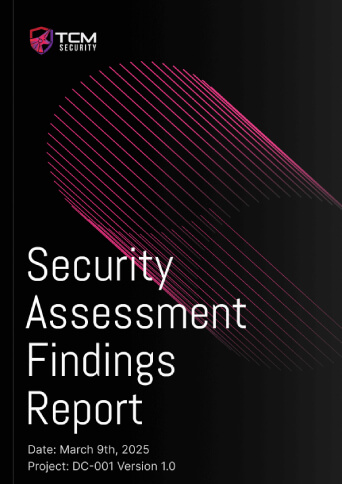
Inside a Real Pentest Report
A Report That Fortune 500 Companies Trust
Get a firsthand look at a real penetration testing report and understand how our expert team communicates risk, impact, and remediation steps.
Loading form...